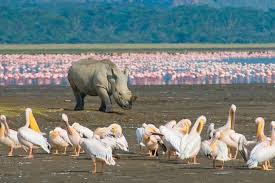
Pink Paradise: Africa's Greatest Birding Spectacle
Embark on a 4-day safari to Lake Nakuru National Park, world-renowned for its spectacular flamingo populations that can number in the millions, literally painting the lake shores pink. This alkaline lake in Kenya's Great Rift Valley creates the perfect conditions for algae growth, attracting both lesser and greater flamingos in breathtaking numbers. Beyond the flamingos, Lake Nakuru is also one of Kenya's premier rhino sanctuaries, offering excellent opportunities to see both black and white rhinos, along with diverse wildlife including tree-climbing lions, leopards, and over 450 bird species.
Current Flamingo Status
MEDIUM CONCENTRATION
Flamingo numbers at Lake Nakuru vary based on water levels and algae conditions. While historically hosting millions, current conditions support healthy populations of both lesser and greater flamingos, along with exceptional numbers of other waterbirds. The park remains one of Africa's premier birding destinations regardless of flamingo concentrations.
Tour Highlights:
- Flamingo Spectacle: Witness massive flocks of lesser and greater flamingos (numbers vary seasonally)
- Rhino Sanctuary: Excellent chances of seeing both black and white rhinos in their protected habitat
- Birding Paradise: Over 450 bird species including pelicans, herons, kingfishers, and birds of prey
- Baboon Cliff: Panoramic views of the entire lake and surrounding landscape
- Makalia Falls: Scenic waterfalls within the park, especially impressive during rainy season
- Tree-Climbing Lions: Chance to see the famous lions of Lake Nakuru resting in acacia trees
- Photography Opportunities: Exceptional wildlife and landscape photography throughout
- Game Drives: Diverse wildlife viewing including leopards, buffalo, giraffes, and antelope species
Key Bird Species at Lake Nakuru
Smaller, darker pink flamingos that feed on blue-green algae
Taller, paler flamingos that feed on crustaceans and mollusks
Iconic raptor often seen perched near the lake shore
Massive waterbirds that work together to herd fish
Large, distinctive storks often seen near the lake edges
Multiple species including giant, pied, and malachite kingfishers
Detailed Safari Itinerary
DAY 1: NAIROBI TO LAKE NAKURU
Morning Departure: Pick up from your Nairobi hotel or airport. Briefing about Lake Nakuru's unique ecosystem and birdlife.
Scenic Drive: Journey through the Great Rift Valley with stop at viewpoint for photos of the dramatic landscape.
Lunch en route: Stop at a restaurant overlooking the Rift Valley escarpment.
Afternoon Arrival: Enter Lake Nakuru National Park with immediate bird watching opportunities.
Evening Game Drive: First game drive along the lake shore, looking for flamingo flocks and other waterbirds.
Rhino Spotting: Focus on areas known for rhino sightings as evening approaches.
Accommodation: Check into your lodge or hotel overlooking the lake or park.
Welcome Dinner: Dinner with orientation about Lake Nakuru's conservation success stories.
DAY 2: FULL DAY BIRDING & WILDLIFE
Sunrise Birding: Early morning departure for optimal bird watching. Morning light is perfect for photography.
Lake Shore Exploration: Extensive time along the lake edges watching flamingos and other waterbirds.
Breakfast in the Bush: Picnic breakfast at a scenic location with lake views.
Baboon Cliff: Morning visit to this viewpoint for panoramic views of the entire lake and park.
Rhino Tracking: Focused search for both black and white rhinos in their preferred habitats.
Lunch at Lodge: Return to accommodation for lunch and midday rest.
Afternoon Game Drive: Explore different areas of the park, looking for predators and other mammals.
Makalia Falls: Visit these scenic waterfalls (water flow dependent on season).
Evening Photography: Golden hour photography session focusing on wildlife and landscapes.
Birding Checklist Review: Evening review of bird species spotted during the day.
DAY 3: SPECIALIZED BIRDING & CONSERVATION FOCUS
Specialized Bird Walk: Morning guided walk in areas with diverse bird habitats (where safe and permitted).
Bird Photography Workshop: Practical session on bird photography techniques and equipment.
Breakfast with a View: Breakfast at a location overlooking the lake's bird concentrations.
Conservation Visit: Visit to Lake Nakuru's rhino sanctuary or conservation project (where available).
Lunch at Lodge: Return for lunch and afternoon relaxation.
Afternoon Options: Choose your focus:
- Option A: Intensive bird watching with specialized guide
- Option B: Photography tour focusing on landscapes and wildlife
- Option C: Extended game drive covering all park habitats
- Option D: Visit to nearby attractions or cultural sites
Evening Game Drive: Final extensive game drive covering favorite viewing areas.
Sundowner: Drinks at scenic location as the sun sets over the lake.
Conservation Talk: Evening presentation about Lake Nakuru's ecosystem and conservation challenges.
DAY 4: FINAL MORNING & RETURN TO NAIROBI
Final Birding Session: Early morning for last bird watching and photography opportunities.
Flamingo Farewell: Final viewing of flamingo flocks in morning light.
Breakfast: Final breakfast at your accommodation.
Departure Game Drive: Game drive en route to the park exit, looking for any missed species.
Optional Visits: Depending on time and interest:
- Stop at the park's museum or information center
- Visit to local craft market for souvenirs
- Photo stop at additional Rift Valley viewpoints
Lunch en route: Stop for lunch at a restaurant on the way back to Nairobi.
Arrival in Nairobi: Drop off at your Nairobi hotel or Jomo Kenyatta International Airport by mid-afternoon.
Safari Extension Options: Combine with Lake Naivasha, Hell's Gate, or Maasai Mara.
About Lake Nakuru National Park
Birding Paradise: Designated as a RAMSAR site and UNESCO World Heritage Site, Lake Nakuru is one of Africa's most important bird sanctuaries. The alkaline lake supports massive populations of algae, which in turn support huge numbers of lesser flamingos that filter-feed on the algae.
Rhino Success Story: Lake Nakuru National Park has been a critical sanctuary for both black and white rhinos. The park's intensive protection has made it one of the best places in Kenya to see these endangered species in their natural habitat.
Ecological Importance: The park protects a diverse ecosystem including the lake, surrounding woodland, and grasslands. It's home to 56 mammal species and over 450 bird species, making it a biodiversity hotspot.
Geological Wonder: Part of Kenya's Great Rift Valley, the park offers dramatic landscapes including cliffs, waterfalls, and acacia woodlands surrounding the lake.
Rhino Viewing at Lake Nakuru
Lake Nakuru National Park is one of Kenya's premier rhino sanctuaries, established in 1987. The park provides protected habitat for:
- Black Rhinos: The more endangered of the two African rhino species, known for their hooked lip for browsing leaves and branches
- White Rhinos: Actually "wide" rhinos (from Dutch "wijd"), with square lips for grazing grass
- Conservation Success: The park's intensive protection has allowed rhino populations to stabilize and grow
- Viewing Tips: Early morning and late afternoon are best for rhino sightings, often near the lake shores or in open grasslands
Ready for the Pink Spectacle?
Book now for an unforgettable birding and wildlife experience at Lake Nakuru. Witness one of Africa's greatest natural spectacles while supporting important conservation efforts for rhinos and other endangered species.
Book This Safari NowContact our safari specialists for current flamingo conditions and to customize your Lake Nakuru birding adventure.