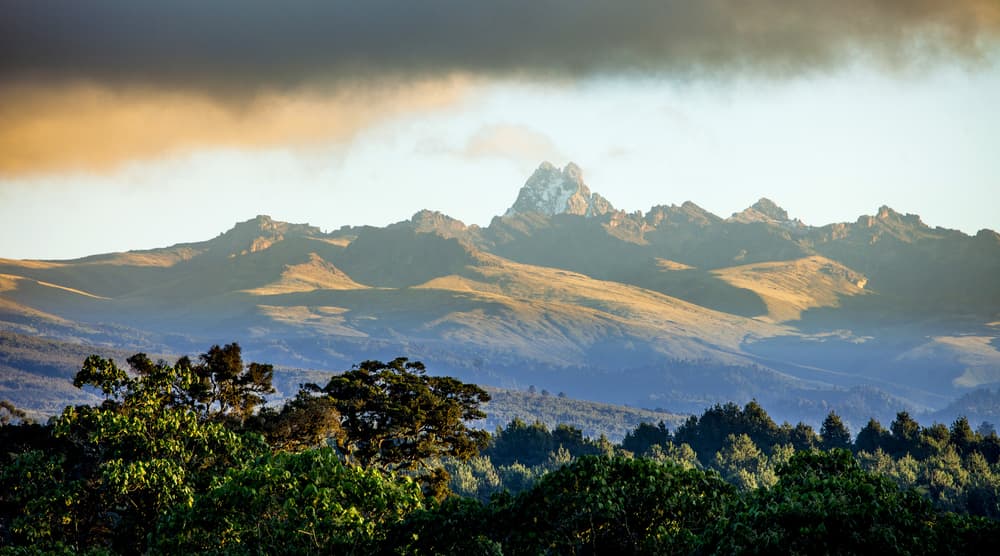
Africa's Second Highest Peak - The Gentle Giant
Embark on a 5-day adventure to summit Point Lenana (4,985m), the third highest peak of Mount Kenya and the highest point accessible without technical climbing equipment. The Sirimon Route offers the most scenic and gradual ascent, providing excellent acclimatization as you pass through diverse ecosystems from montane forest to alpine moorland and finally the dramatic glacial valleys. This trek is perfect for those seeking a high-altitude challenge without the technical requirements of Batian or Nelion peaks.
Expedition Highlights:
- Point Lenana Summit: Reach 4,985m for sunrise over Africa
- Scenic Sirimon Route: Most beautiful approach with gradual ascent
- No Technical Climbing: Reach high altitude without ropes or special equipment
- Diverse Ecosystems: Pass through 4 distinct vegetation zones
- Professional Guides: KMGA certified mountain guides
- Mountain Huts: Comfortable hut accommodation along the route
- Wildlife: Chance to see unique mountain species
- UNESCO World Heritage Site: Climb in a protected biosphere reserve
Mount Kenya Peaks
5,199m (17,057ft)
Highest peak, technical rock climb
IV 5.9 (Technical rock climb)
5,188m (17,021ft)
Second highest, technical climb
Connected to Batian by Gate of Mists
4,985m (16,355ft)
Third highest, trekking peak
No technical climbing required
4,960m (16,273ft)
Fourth highest peak
Former Governor of Kenya
Detailed Climbing Itinerary
DAY 0: ARRIVAL IN NANYUKI
Arrival: Arrive in Nanyuki town, gateway to Mount Kenya's northern slopes.
Briefing: Comprehensive expedition briefing with head guide.
Gear Check: Thorough check of all trekking equipment.
Meet the Team: Introduction to guides, porters, and cook.
Final Preparations: Packing for the mountain.
Accommodation: Overnight at hotel in Nanyuki.
Health Check: Initial medical assessment.
Altitude: Nanyuki sits at 1,950m - good start for acclimatization.
DAY 1: NANYUKI TO SIRIMON GATE TO OLD MOSES CAMP
Elevation: 1,950m to 2,650m to 3,300m (6,400ft to 8,700ft to 10,800ft)
Hiking Time: 3-4 hours
Distance: 9km
Habitat: Montane forest, bamboo zone
Morning: Drive to Sirimon Gate (2,650m), complete park formalities.
Begin Trek: Start through beautiful montane rainforest.
Wildlife: Chance to see Sykes monkeys, buffalo, elephants.
Bamboo Zone: Enter dense bamboo forest.
Gradual Ascent: Gentle climb along Sirimon Track.
Arrival: Reach Old Moses Camp (3,300m) by mid-afternoon.
Acclimatization: Short acclimatization walk after settling in.
Evening: Dinner at the camp, early night.
Views: First views of the main peaks if weather permits.
DAY 2: OLD MOSES TO SHIPTON'S CAMP
Elevation: 3,300m to 4,236m (10,800ft to 13,900ft)
Hiking Time: 6-8 hours
Distance: 14km
Habitat: Heath and moorland, alpine zone
Key Acclimatization Day: Long but gradual ascent.
Liki North Valley: Walk through beautiful Liki North Valley.
Giant Plants: See giant lobelias and groundsels.
Mackinder's Valley: Enter spectacular Mackinder's Valley.
First Glacier Views: Views of Terere and Sendeyo peaks.
Arrival: Reach Shipton's Camp (4,236m) by late afternoon.
Altitude: First night above 4,000m.
Evening: Spectacular sunset views of the peaks.
Health Check: Detailed health assessment.
Important AcclimatizationDAY 3: ACCLIMATIZATION DAY AT SHIPTON'S
Rest Day: Crucial acclimatization day at high altitude.
Options:
- Rest: Complete rest at Shipton's Camp
- Short Hike: Optional hike to Hausberg Tarn (4,400m)
- Photography: Explore Mackinder's Valley for photography
- Summit View: Clear views of Point Lenana and main peaks
Hydration: Important to drink plenty of fluids.
Health Monitoring: Detailed health checks by guides.
Summit Briefing: Detailed briefing about summit day.
Equipment Check: Final check of all gear for summit.
Mental Preparation: Prepare for early start tomorrow.
Early Night: Early dinner and bedtime.
This acclimatization day at 4,236m significantly increases summit success chances by allowing your body to adapt to the altitude before the final push.
DAY 4: SUMMIT DAY! SHIPTON'S TO POINT LENANA TO MACKINDER'S CAMP
Elevation: 4,236m to 4,985m to 4,200m (13,900ft to 16,355ft to 13,780ft)
Hiking Time: 3-4 hours up, 4-5 hours down
Distance: 5km up, 10km down
Habitat: Alpine desert, scree, rock
Early Start: Wake up around 2:00 AM, light breakfast.
Begin Summit: Start climbing in darkness with headlamps.
Austen Valley: Climb through spectacular Austen Valley.
Lewis Glacier: Pass below massive Lewis Glacier.
Final Ascent: Steep scree slope to summit ridge.
SUMMIT! Reach Point Lenana (4,985m) for sunrise!
Celebration: Photos, sign summit register, incredible sunrise views.
Views:
On clear days, see Kilimanjaro to the south.
Descent: Descend via stunning Gorges Valley.
Two Tarn: Pass beautiful alpine tarns.
Arrival: Reach Mackinder's Camp (4,200m) by late morning.
Rest: Rest of day to recover at camp.
Celebration: Celebrate successful summit!
DAY 5: MACKINDER'S TO NARO MORU GATE TO NAIROBI
Elevation: 4,200m to 2,600m (13,780ft to 8,530ft)
Hiking Time: 5-6 hours
Distance: 15km
Habitat: Moorland, bamboo forest, rainforest
Morning: Final breakfast on the mountain.
Begin Descent: Descend through Teleki Valley.
Vertical Bog: Pass through famous "Vertical Bog" - can be muddy!
Bamboo Zone: Re-enter beautiful bamboo forest.
Naro Moru River: Follow the river downstream.
Arrival at Gate: Reach Naro Moru Gate (2,600m).
Certificates: Receive Mount Kenya climbing certificates.
Tipping Ceremony: Traditional tipping ceremony for crew.
Farewell: Say goodbye to mountain crew.
Transfer: Drive back to Nairobi (3-4 hours).
Arrival: Arrive in Nairobi by late afternoon.
Options: Transfer to airport or hotel for overnight.
Extension Options: Safari to Maasai Mara or relaxation at Kenyan coast.